
Why choose a gentle cleanser for daily skin care?
The skin is naturally protected by a hydrolipidic film, made of water and lipids, which acts as a barrier against external aggressions. This film plays an essential role in maintaining skin hydration and overall skin balance.
On a daily basis, cleansing is essential to remove impurities, sweat, excess sebum and pollution residues. However, using overly aggressive cleansers can damage this natural barrier, leading to sensations of tightness, dryness or skin reactivity.
Choosing a gentle cleanser helps preserve the skin’s natural balance while ensuring effective hygiene. This is particularly important for sensitive, dry or blemish-prone skin, which may react more strongly to pH variations or harsh cleansing agents.
Whether using a liquid soap obtained through saponification or a shower gel formulated with mild surfactants, the goal remains the same: to cleanse the skin without compromising comfort or its natural balance.

Adopting a skin-friendly cleanser in your daily routine therefore helps limit skin imbalances and maintain supple, soothed and comfortable skin.
Liquid soap or shower gel: what is the difference?

Liquid soap and shower gel are both daily cleansing products used to wash the skin. However, their manufacturing process, composition and skin feel can be very different.
Understanding these differences makes it easier to choose the cleanser that best suits your skin type and sensory preferences.
A difference in manufacturing
Liquid soap is produced through a saponification process, during which vegetable oils are transformed into soap while naturally releasing moisturizing glycerin.
The base of the product is therefore oil that is chemically transformed into a cleansing agent. One important consequence of this process is that liquid soap is naturally alkaline and generally does not require preservatives.

Shower gel, on the other hand, is formulated from selected surfactants, cleansing agents that allow the formula to be adapted to the intended use. There is therefore a wide variety of shower gels, ranging from powerful cleansing formulas designed for deep cleaning to much gentler formulas intended for sensitive skin and respectful of the hydrolipidic film. Because they are water-based, shower gels always require preservatives.
A difference in skin tolerance
Skin tolerance largely depends on the formulation used and the skin type.
Thanks to its natural richness in glycerin, liquid soap generally suits normal to dry skin. It helps maintain skin hydration and limits feelings of tightness after washing, especially with daily use on the hands or body.
Shower gels, however, can be formulated to meet more specific needs. Very sensitive skin or skin conditions such as eczema may sometimes tolerate formulas with a pH closer to the skin's natural pH. In such cases, it is recommended to choose sulfate-free shower gels formulated with mild surfactants. Many shower gels on the market contain sulfated cleansing agents selected for their strong foaming ability. For fragile skin, gentler alternatives may help preserve skin comfort.
A difference in sensory experience
Beyond cleansing, liquid soap and shower gel provide different sensations during use.
Liquid soap derived from the saponification of vegetable oils generally produces a fine and light foam. To improve application comfort, some liquid soaps are thickened, for example through the addition of salt.
At Alinessence, we have chosen to use guar gum, a natural thickening agent that improves the glide of the soap on the skin during washing.
This texture allows a more even application, even if the foam remains generally more discreet than that of certain shower gels.
Shower gel, meanwhile, allows the texture, viscosity and fragrance to be more easily adjusted. Depending on its formulation, it can therefore offer a richer foam or a more enveloping sensory experience.
Liquid soap or shower gel: which one for sensitive skin?
For sensitive skin, the choice of cleansing product often depends on skin reactivity and the sensation after washing.
For normal to dry skin, which may be sensitive without presenting a specific condition, a glycerin-rich liquid soap can be perfectly suitable for daily body cleansing.
However, during periods of heightened sensitivity, especially in the case of eczema flare-ups, using a fragrance-free shower gel formulated with mild cleansing agents may be preferable.

Between flare-ups, when the skin is more stable, natural liquid soap can again be used for daily cleansing.
Natural liquid soap:
a gentle alternative to shower gel?
Natural liquid soap can be an interesting alternative to shower gel for daily cleansing, particularly for normal to dry skin.
Because it results from the saponification of vegetable oils, it naturally contains glycerin released during the manufacturing process. This glycerin helps maintain skin hydration and limits tightness after showering.
Its lipid base, derived from oils used in the formula, may therefore be better tolerated by some dry skin types during daily use.

When used for hand washing, some users also report greater comfort and fewer dry patches around the fingers.
However, in cases of very sensitive or reactive skin, or skin conditions, certain shower gel formulas may still be preferable during flare-ups.
Natural liquid soap can then be reintroduced once the skin becomes more stable.
A liquid soap designed for sensory experience
At Alinessence, the development of our liquid soap combines artisanal craftsmanship with extensive research and development in order to achieve a formula that is both effective and pleasant for everyday use, whether in the shower or at the sink.
Our liquid soaps are concentrated formulas, allowing a pleasant foam without requiring a large amount of product.
To improve the application comfort, we have chosen to incorporate guar gum, a natural texturizing agent that enhances the glide of the soap during washing.
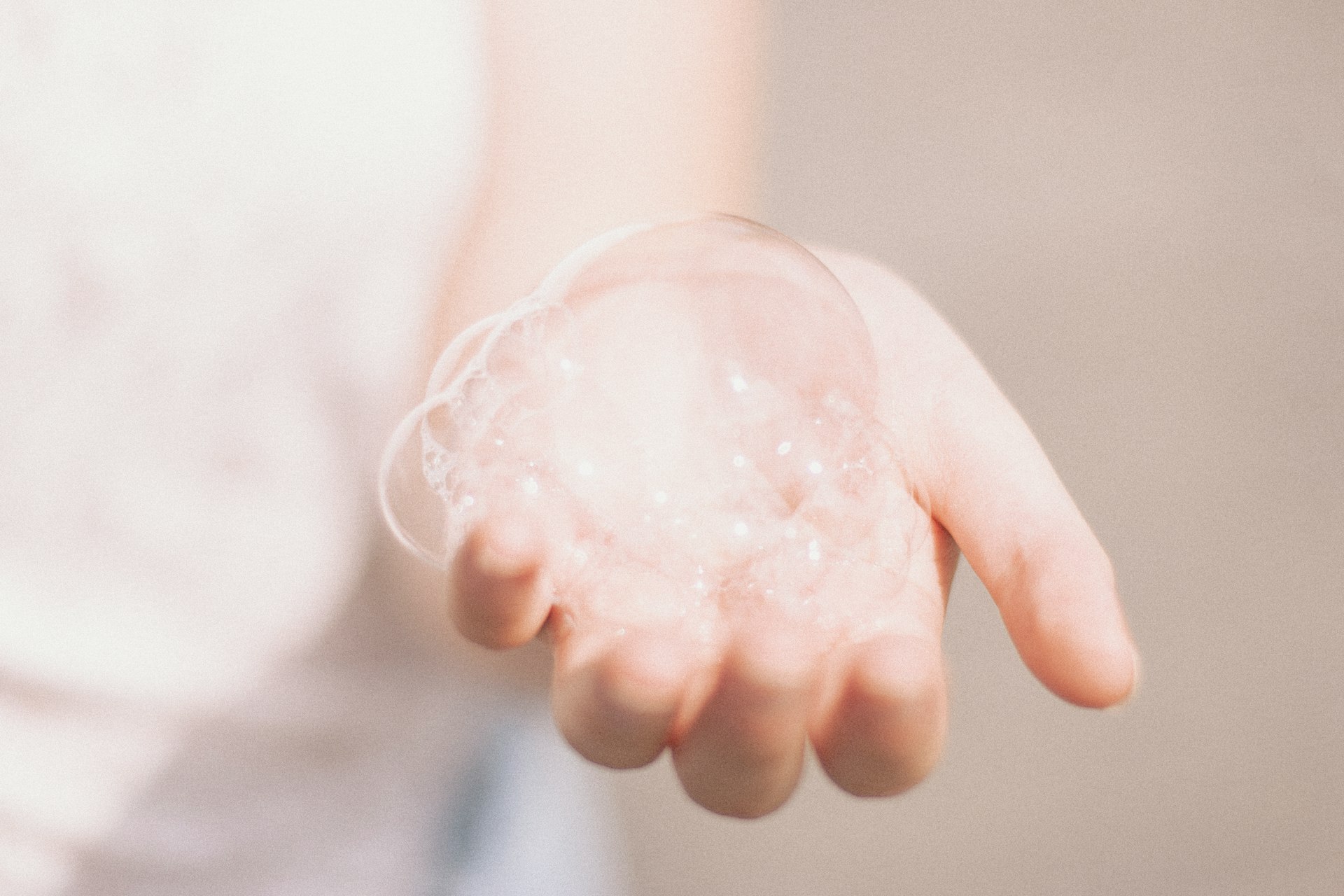
Additionally, the glycerin naturally produced during saponification helps maintain skin hydration and reduce dryness after use.
These formulation choices are the result of nearly two years of research and numerous user tests, conducted to achieve the texture and sensory experience expected by our testers.
Which cleanser should you choose according to your skin type?
➡️ Dry skin
Dry skin can perfectly use a glycerin-rich liquid soap, which helps reduce tightness after washing.
➡️ Sensitive skin
When the skin experiences temporary discomfort such as redness or overheating sensations, liquid soap may still be suitable for daily cleansing. During flare-ups, however, a fragrance-free shower gel may be preferable.
➡️ Oily skin
Oily skin can use either liquid soap or shower gel. The key is choosing a formula suitable for frequent use.
Overly harsh cleansers, especially those containing sulfates, can trigger a rebound effect, where the skin produces more sebum to compensate for dryness.
We discuss this topic in more detail in our blog article dedicated to oily and acne-prone skin.
➡️ Normal skin
For normal skin, the choice mainly depends on personal preferences and sensory experience.
Liquid soap or shower gel: what about environmental impact?
Beyond skin comfort, the choice of cleanser can also affect the environment, particularly once it is released into wastewater.
Soap produced from the saponification of vegetable oils is made of compounds that are biodegradable by aquatic microorganisms.
Shower gels contain surfactants whose biodegradability varies depending on their chemical structure and origin.

Recent scientific studies have shown that components derived from saponification may present higher biodegradability in aquatic environments than certain synthetic detergents.
Therefore, the choice between liquid soap and shower gel may also depend on environmental considerations.
Natural soap is clinically effective and less toxic and more biodegradable in aquatic organisms and human skin cells than synthetic detergents – PLOS One, 2025.
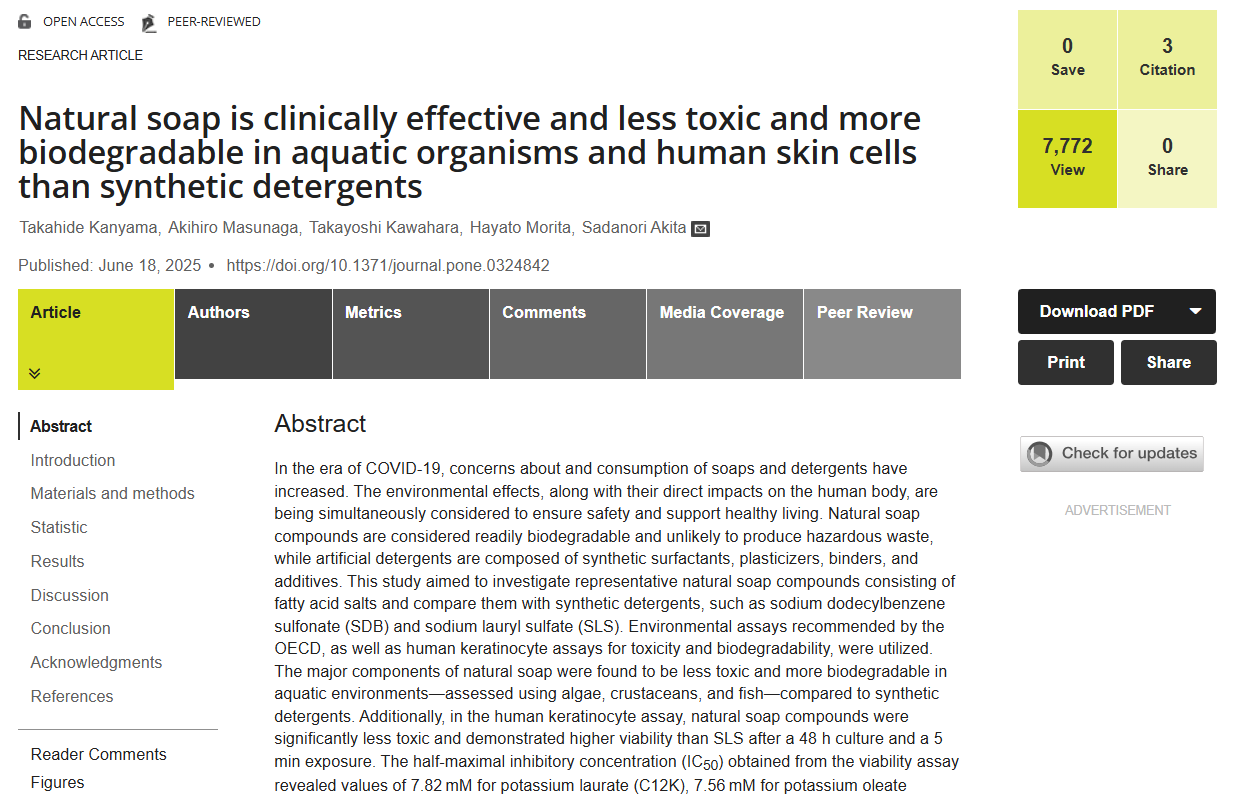
https://journals.plos.org/plosone/article?id=10.1371/journal.pone.0324842
Moreover, the environmental impact of a cleansing product does not depend solely on its formula, but also on its packaging. With this in mind, we explored the use of glass bottles. However, using glass in the shower may present risks in case of breakage. We therefore looked for an alternative that combines safety in use with a reduced environmental impact.
Our liquid soaps are packaged in lightweight PET bottles, a material that is widely collected and recycled in Europe. This allows us to reduce the amount of plastic used while relying on an existing recycling stream.
They are also available in bulk through partner stores offering this type of distribution, and can be supplied in larger volumes (5 L) upon request for institutions or professional use.
Our Alinessence liquid soap: gentle and effective
Designed for daily use, our liquid soap can be used both in the shower and at the sink.
Beyond cleansing, it leaves a delicate fragrance, turning a daily routine into a more pleasant and comforting moment.
Within our range, we have always offered fragrance-free alternatives for sensitive skin. With liquid soap, however, the saponification of oils naturally leaves a slight scent that we chose not to offer as-is in order to preserve the sensory experience.
We will soon introduce a fragrance-free alternative with physiological pH, with the launch of our upcoming hair and body shower gels, designed for the most sensitive skin.
